
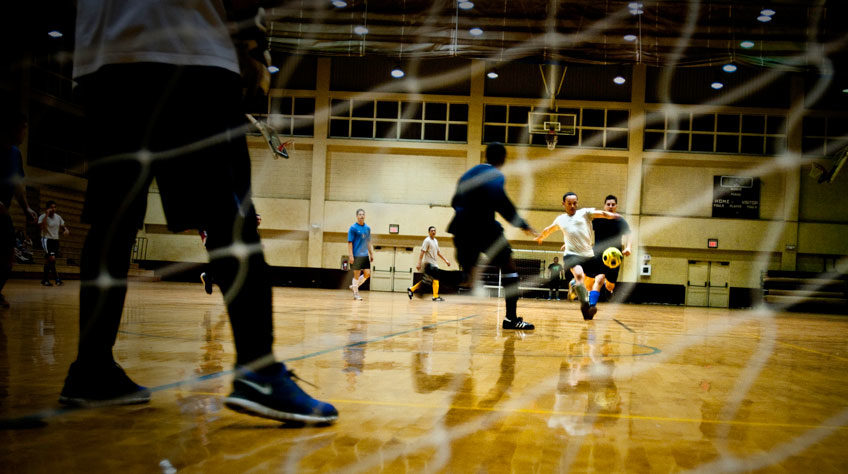
Indoor soccer shoes are slightly different from soccer cleats. First of all, they lack any studs and come with a durable rubber outsole. The outsole used is comparable to one that you might find on basketball or volleyball shoes. Likewise, indoor soccer shoes have a tread pattern that provides optimal traction on glossy surfaces and turf. For this reason, it makes them ideal for indoor soccer and variations such as futsal. However, there are some things you should take into account when choosing the best indoor soccer shoes for you. The most important are learning the anatomy, choosing hardwood or turf shoes, knowing your material, and finding the right fit. So let’s not waste any more time with this idle talk, here’s our step-by-step guide on how to choose indoor soccer shoes.
How to Choose Indoor Soccer Shoes Infographic
Share This Guide On Your Site
How to Choose Indoor Soccer Shoes: In-Depth
Step 1: Discover the Anatomy
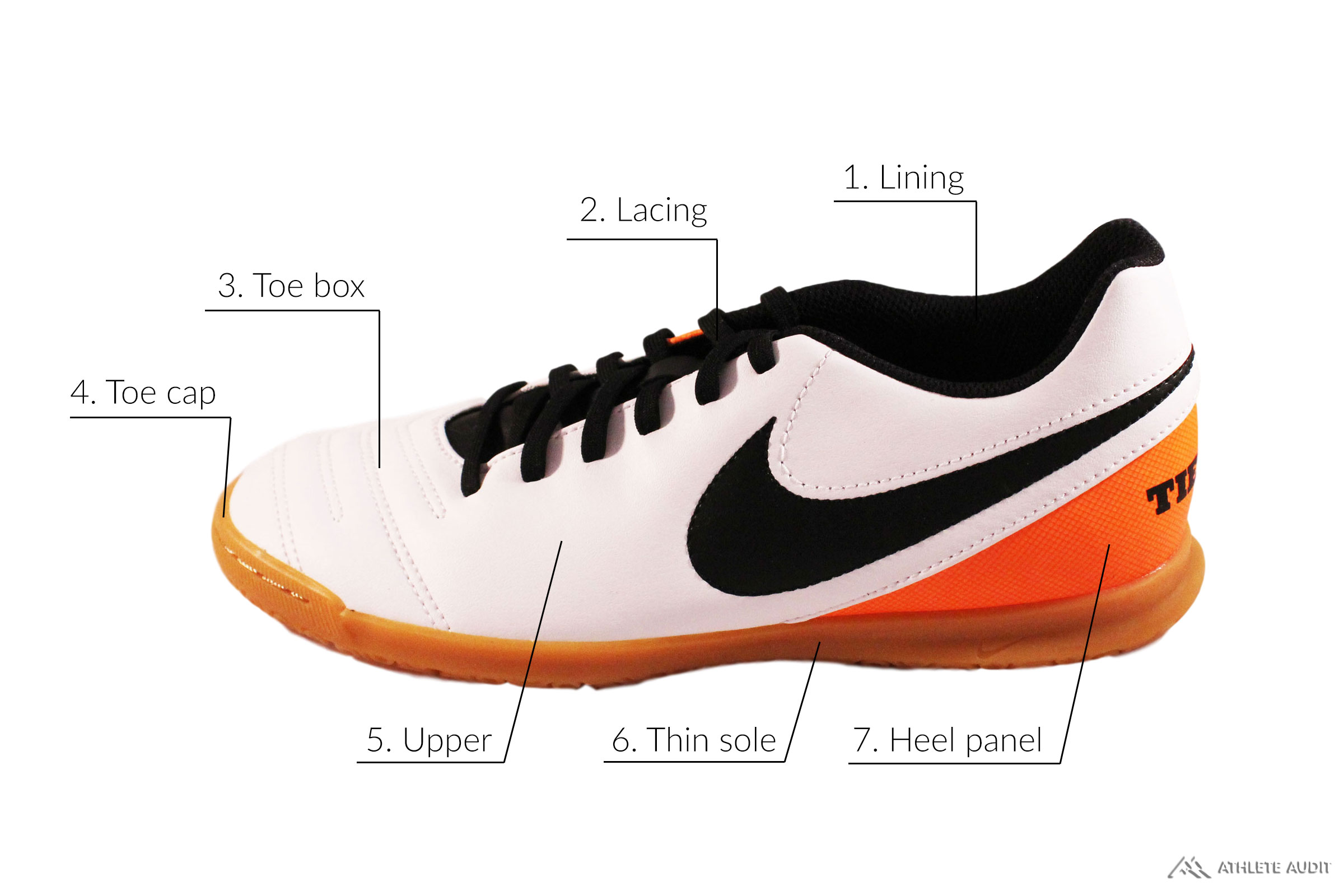
- Lining - A sock-like fabric in the inside of the shoe helps to improve comfort
- Lacing - Traditional laces allow the most adjustment in fit
- Toe box - A flexible toe box allows for efficient running and dynamic movements
- Toe cap - Improves the durability of the toe and helps with the full motion of a gait
- Upper - Lightweight uppers are usually made of leather, kangaroo leather, or synthetic leather for superior feel
- Thin sole - Helps to increase how much you feel the ground underneath you
- Heel panel - The piece of fabric that covers the heel area of the shoe
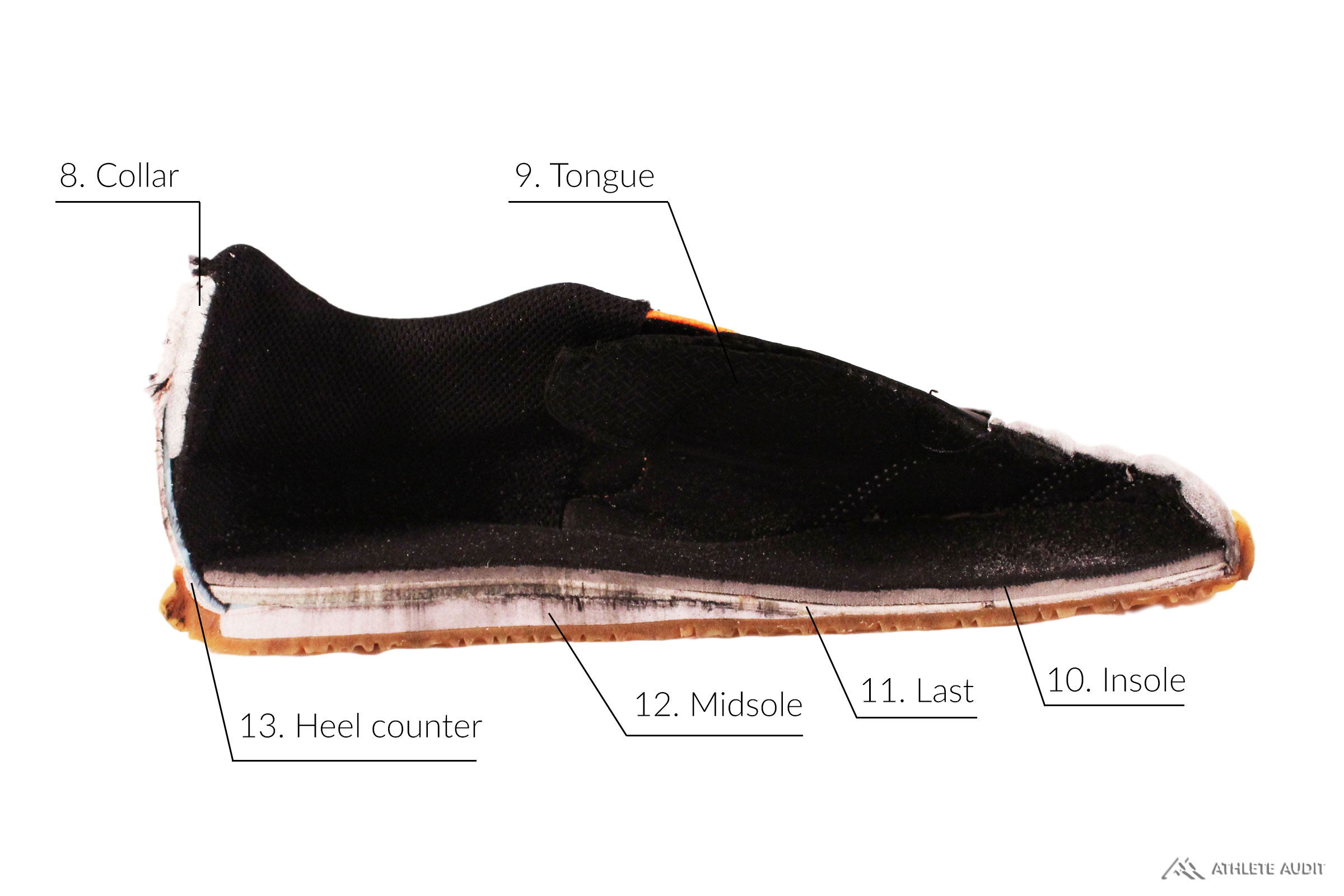
- Collar - A padded collar helps to improve comfort and fit
- Tongue - A thin tongue with minimal padding helps to improve feel for the ball
- Insole - The footbed of the shoe, provides comfort and support. Some may be removable
- Last - Lies underneath the insole, determines the shape of the shoe
- Midsole - Located between the insole and outsole, provides cushioning throughout the foot. Relatively thin
- Heel counter - A tough plastic insert in the back of the shoe provides structural support for the heel
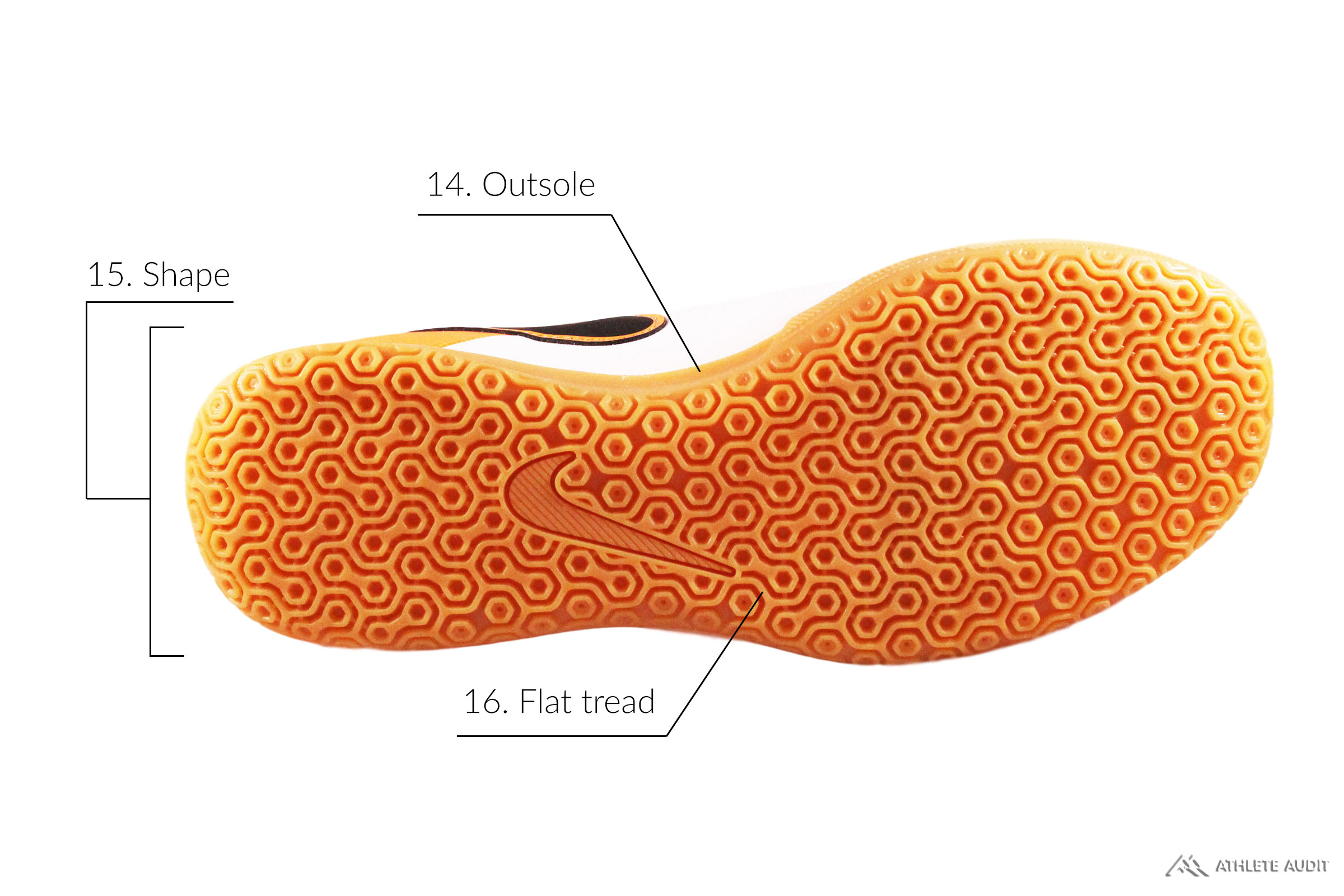
- Outsole - The rubber outsole on the bottom of the shoe that provides traction on smooth indoor courts
- Shape - Determined by the last, the shape affects how the shoe fits in the heel, arch, and forefoot
- Flat tread - Provides superior traction and optimal feel on indoor courts
Step 2: Hardwood or Turf?
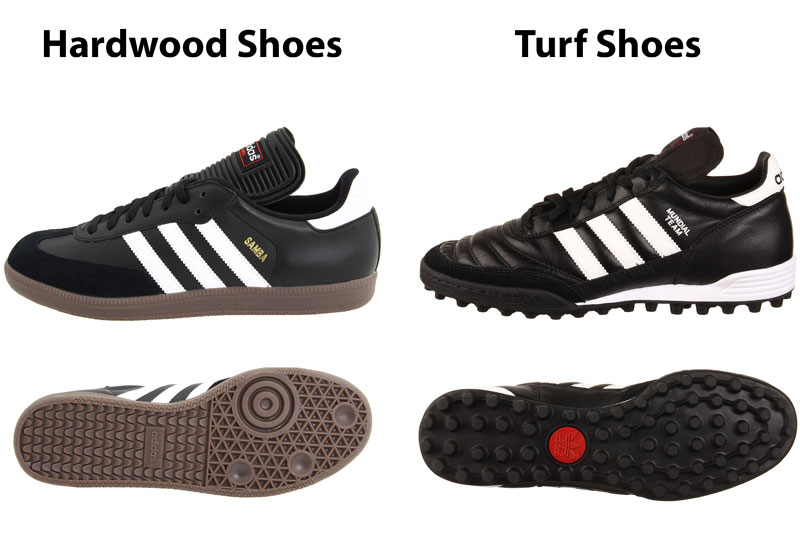
You can play with indoor soccer shoes on either one of two types of ground: hardwood or turf.
Hardwood
Soccer shoes for indoor courts have a flat gum rubber outsole which are meant for courts similar to basketball or volleyball courts. They are extremely lightweight and low-profile. And in a pinch, you can wear them as streetwear too. These rubber outsoles are also non-marking, flexible, and often have intricate tread patterns that provide maximum traction. (Look for flex grooves in the outsole for better flexibility).
Turf
On the other hand, you have soccer shoes meant for turf, which are more durable and have a little more traction than court shoes. Artificial turf shoes usually have low profile studs, which you can tell by the protruding rubber bumps on the bottom. You can use turf shoes on hard, natural fields and artificial turf where they aren’t meant to dig into the ground. They also feature thicker cushioning and are great for training on outdoor fields.
*NOTE: Although you could use some lightweight lifestyle or running shoes for indoor soccer, they aren’t as ideal. Use them only if you have no other option!*
Step 3: Know Your Material
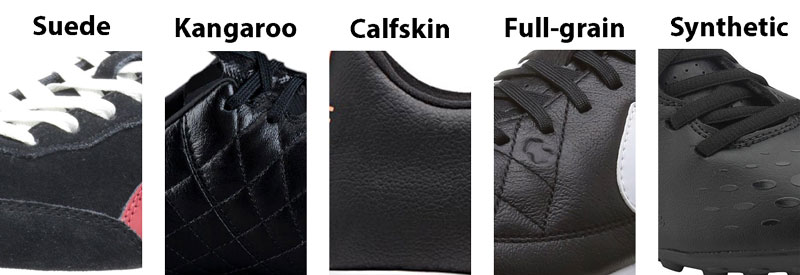
While on the topic of how to choose indoor soccer shoes, we should also touch on material. The material of a shoe plays a huge part in performance as well as durability. Most importantly, different shoe materials offer different touch and feel. This makes the type of material more of a player preference than anything. There are two types of material used for uppers: leather and synthetic. Let’s walk through them.
Leather - Flexible, soft, and molds to your feet. Has excellent touch but stretches as it gets broken in.
Suede leather - Basically leather with the top layer removed for a softer touch.
Kangaroo leather - Also known as k-leather, has amazing comfort and feel. Most expensive leather and not as durable as other leathers.
Calfskin leather - Not as pricey as k-leather and has a similar feel/touch, flexibility, and durability. Retains shape better but weighs more than k-leather.
Full grain leather - Thicker and more durable than calfskin or kangaroo leather with a similar touch/feel. Weighs the most though.
Synthetic - Lighter, thinner, and more durable than real leathers. Doesn’t stretch much.
Synthetic leather - Plays and feels like real leather, although usually lacks a little in touch.
Mesh - Thin and breathable, mesh is very lightweight although offers less support.
Step 4: Find the Right Fit
When learning how to choose indoor soccer shoes, it’s essential to find a pair that fits while also comfortable. You’ll be running on the court anywhere from 60 to 90 minutes at a time, so you’ll want a snug fit that doesn’t irritate you in any way.
Signs of a Perfect Fit
- 1/8 to 1/4″ of space in the toe with a snug forefoot and heel that doesn’t lift
- Fits your foot’s volume and width. Note that volume and width are not the same thing
- No pain, discomfort, chafing, or pressure points
Tips for Fitting Soccer Cleats
- Consider whether material will stretch and size accordingly. Real leathers stretch, synthetics don’t
- Wear socks you intend to play with while trying on shoes
- Shop in-store and in the afternoon for the most accurate fit
- Try walking and running in shoes to ensure comfort. Any pain or discomfort will be felt even more while playing
- Consider adding your own insoles or orthotics for more comfort or a better fit
- Try multiple sizes of the same shoe to find the comfortable ones


