

There are a lot of different things to take into account when learning how to choose wrestling shoes. Learning the anatomy, choosing the best type of sole, and finding the right fit are undoubtedly the most important. Of course, you should also take into account your preferences as well. Style, color, and all of that good stuff is up to you and your personal preferences. All of these different factors should come together to create a shoe that will perform to all of your demands. But, enough talk, let’s get on with it already. How do you find the best wrestling shoes for you? Find out in our step-by-step guide on how to choose wrestling shoes.
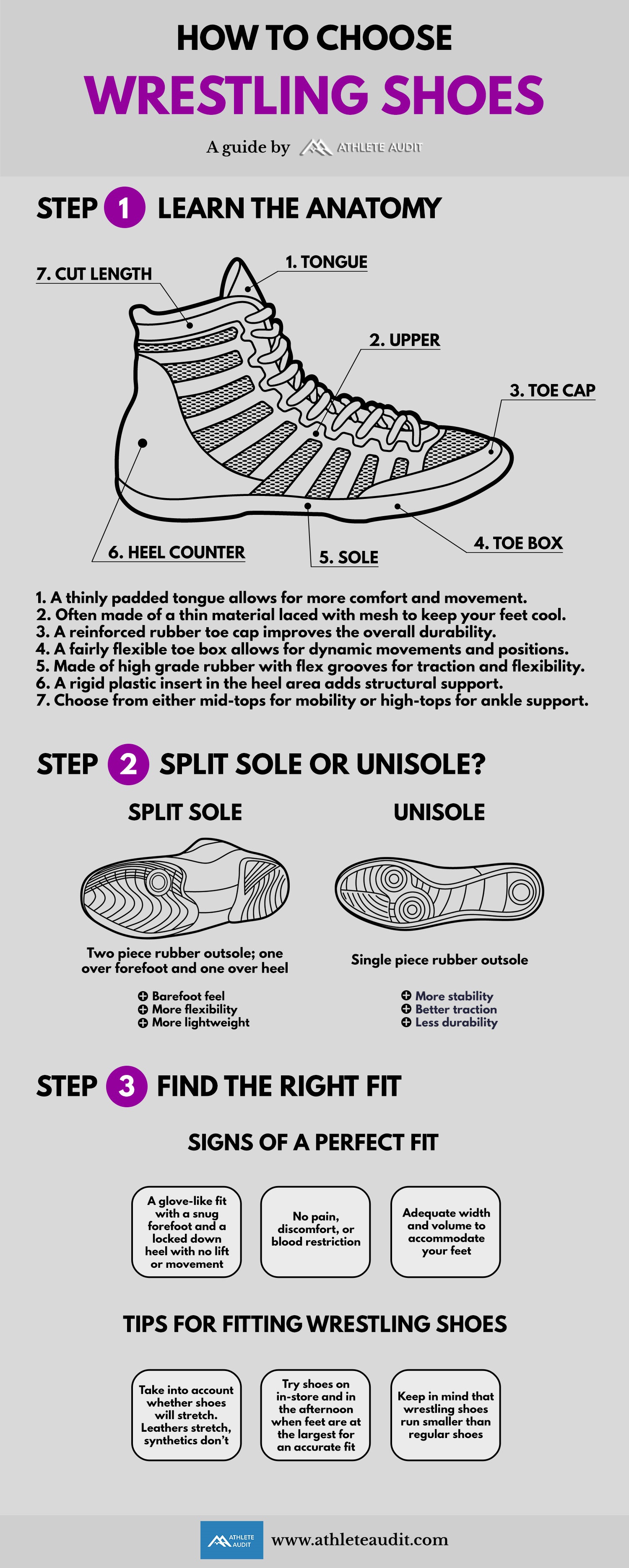
How to Choose Wrestling Shoes Infographic
Share This Guide On Your Site
How to Choose Wrestling Shoes: In-Depth
Step 1: Learn the Anatomy
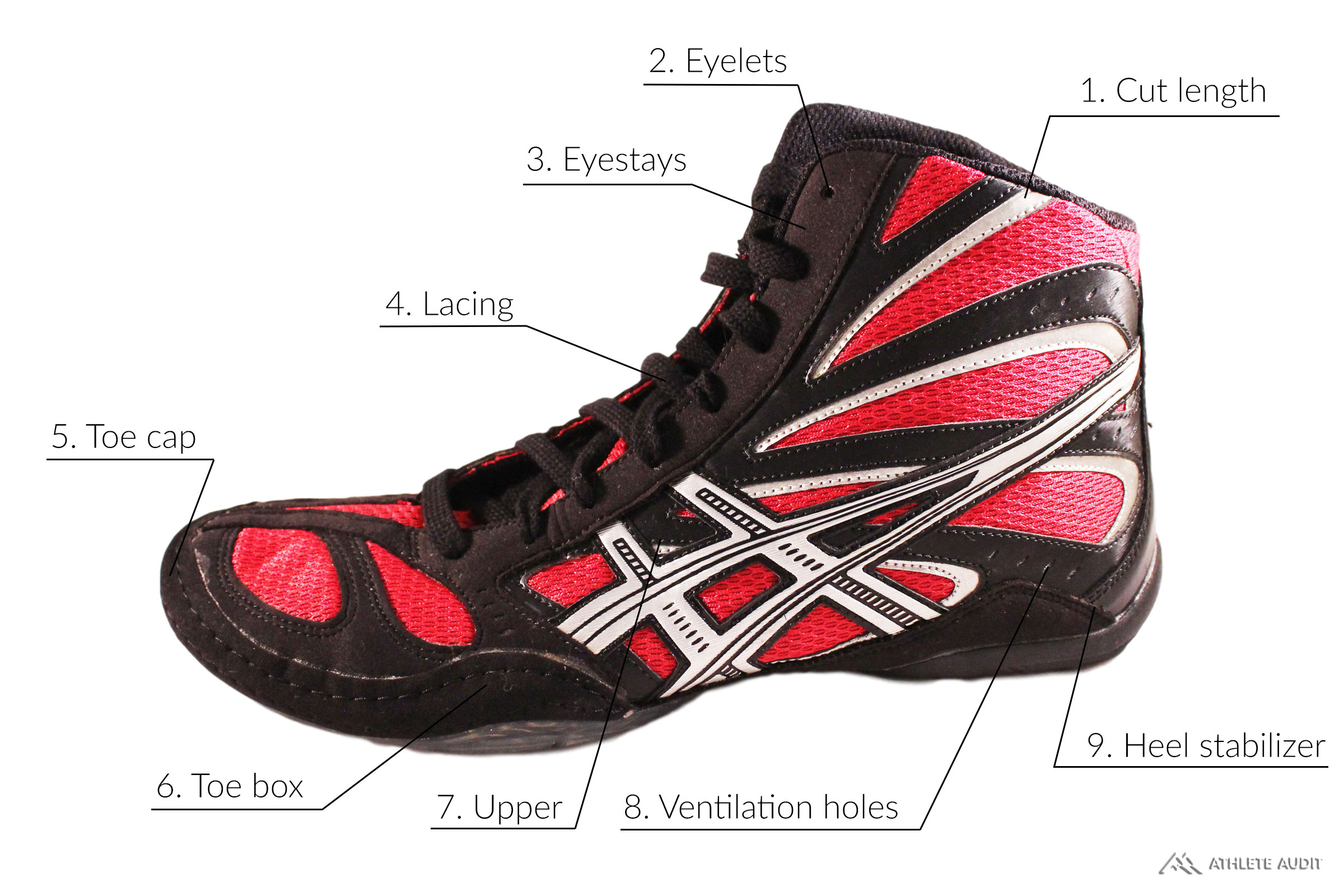
- Cut length - Wrestling shoes come in either mid-cut or high-tops for additional ankle support. Mid-cuts allow for a little more freedom of movement with less ankle support and vice versa
- Eyelets - Small holes in the eyestay helps to guide the shoelaces in place
- Eyestays - Strips of material on either side of the top of the upper houses the eyelets and laces
- Lacing - Traditional laces allow the most adjustment in fit in different zones of the shoe
- Toe cap - A reinforced toe cap improves durability
- Toe box - A fairly flexible toe box allows for dynamic movements and positions
- Upper - Often made of a combination of materials, including leather, synthetics, and mesh
- Ventilation holes - Keeps the shoe breathable while eliminating excess moisture
- Heel stabilizer - Keeps the heel from moving around too much
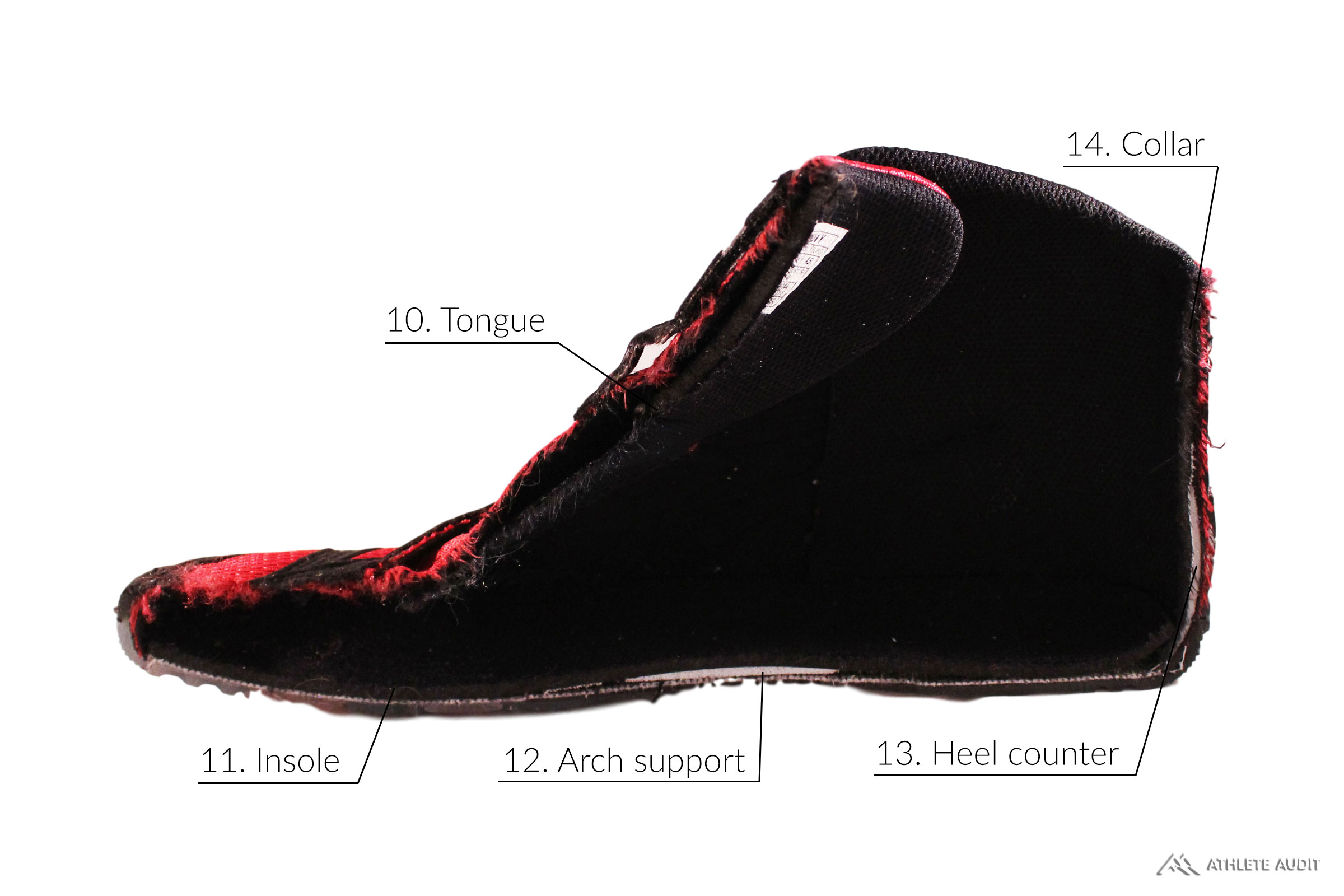
- Tongue - A thinly padded tongue allows for more movement
- Insole - The footbed of the shoe that improves comfort and support. Some can be removed for you to add your own
- Arch support - Some wrestling shoes can have arch support for more comfort
- Heel counter - A firm plastic insert in the back of the shoe that provides structural integrity for the heel
- Collar - A thinly padded collar helps to increase freedom of movement
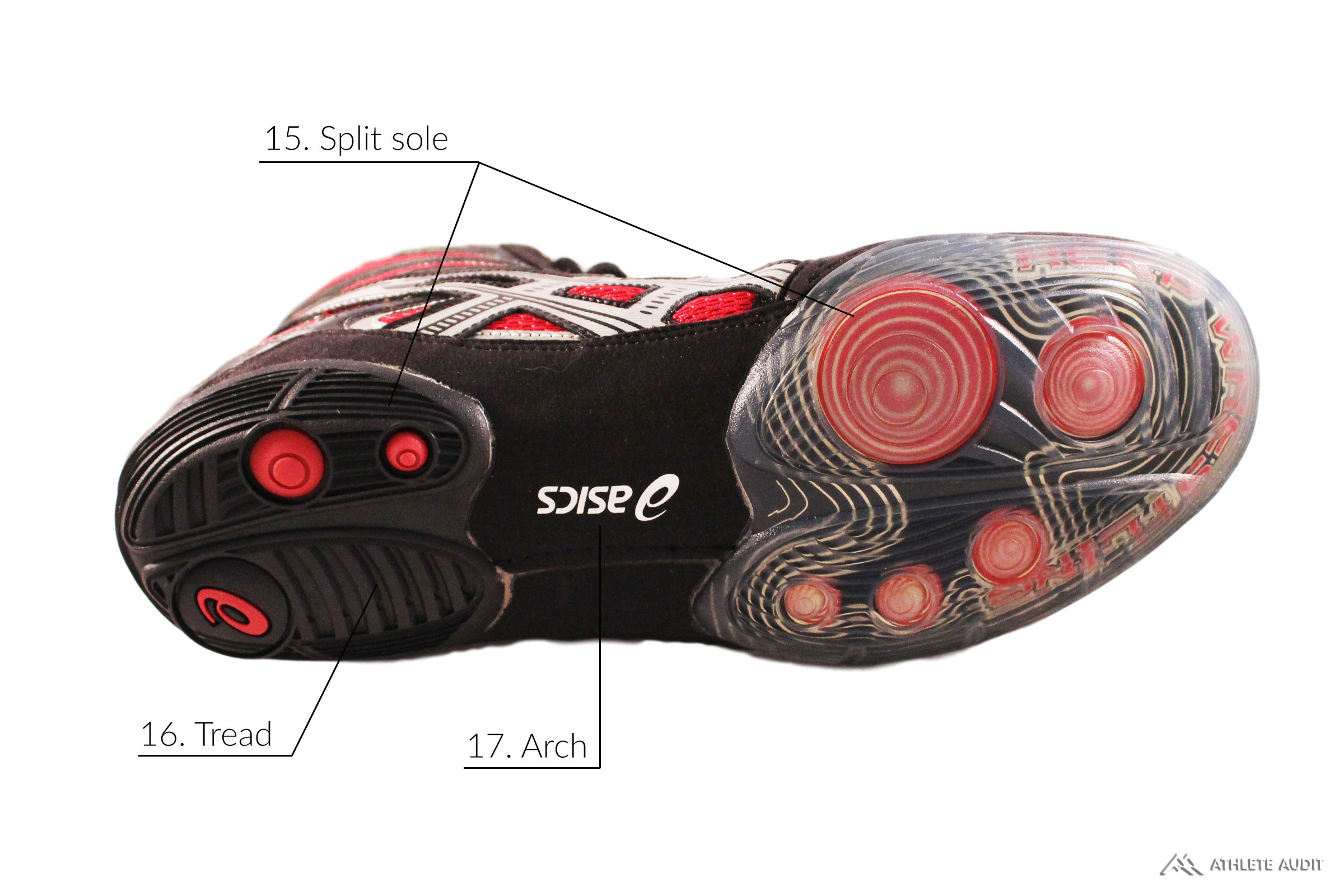
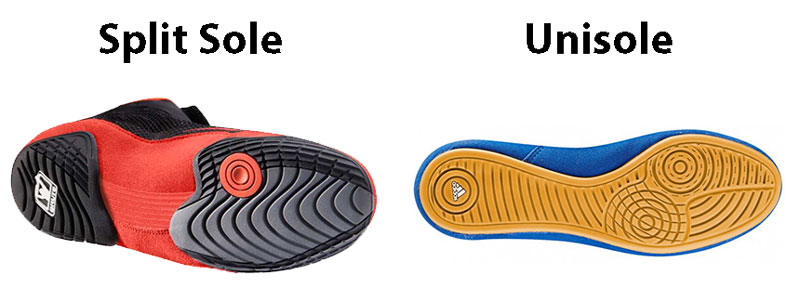
- Split sole - Wrestling shoes either have a split sole or a unisole, each with its own pros and cons. Split soles allow more flexibility while unisoles provide more stability and durability
- Tread - Helps to provide traction on the wrestling mat
- Arch - The middle area of the shoe. Will be bare on split sole shoes
Step 2: Split Sole or Unisole?
There are two different types of soles for wrestling shoes: split soles and unisoles. What you decide on will depend on what aspect you favor more: flexibility, or stability.
- Split sole - Two separate pieces of rubber, one covering the heel and the other covers the forefoot for a barefoot feel. A lack of rubber in the arch provides for more flexibility, a barefoot feel, and lighter weight
- Unisole - Unisoles use a single piece of rubber for the entire outsole. It provides maximum stability, better traction, although less durability unfortunately
Step 3: Find the Right Fit
Next, when learning how to choose wrestling shoes, comfort and fit are crucial factors. What good are a pair of shoes if they aren’t comfortable? Absolutely good for nothing.
Signs of a Perfect Fit
- A glove-like fit with a snug forefoot and a locked down heel with no lift or movement
- No pain, discomfort, or blood restriction. Any irritations will be aggravated even more in strange wrestling positions
- Adequate width and volume to accommodate your feet. Note that width and volume are not the same thing
Tips for Fitting Wrestling Shoes
- Take into account whether shoes will stretch and size accordingly. Real leathers stretch, synthetics don’t
- Try shoes on in-store and in the afternoon when feet are at their largest for an accurate fit
- Keep in mind that wrestling shoes tend to run smaller than regular shoes


